Introduction
The Outcomes Framework places young South Australians, birth to 18, at the centre of 5 key Areas.
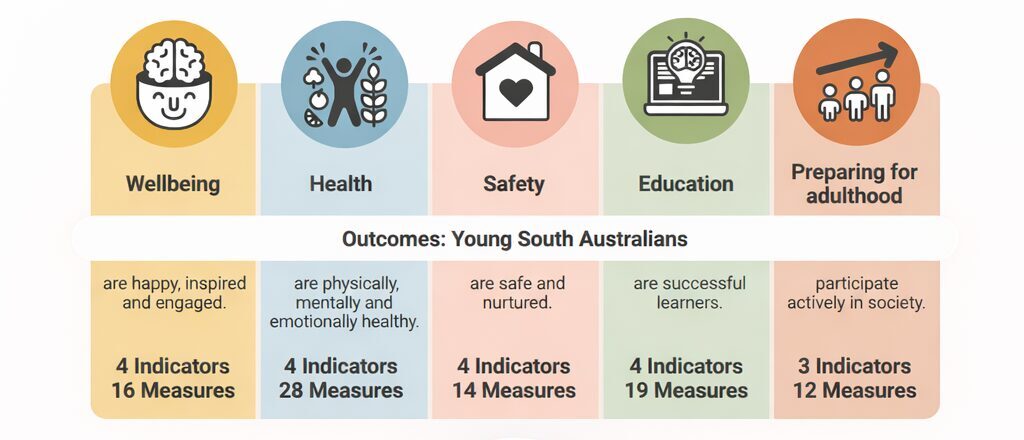
The Report Card uses population-level data to track the Measures in South Australia’s Outcomes Framework for Children and Young People, to reveal current trends and areas for improvement. Where possible, we disaggregate the data into relevant groups of interest, including Aboriginal children and young people. See below the list of Indicators and Measures.
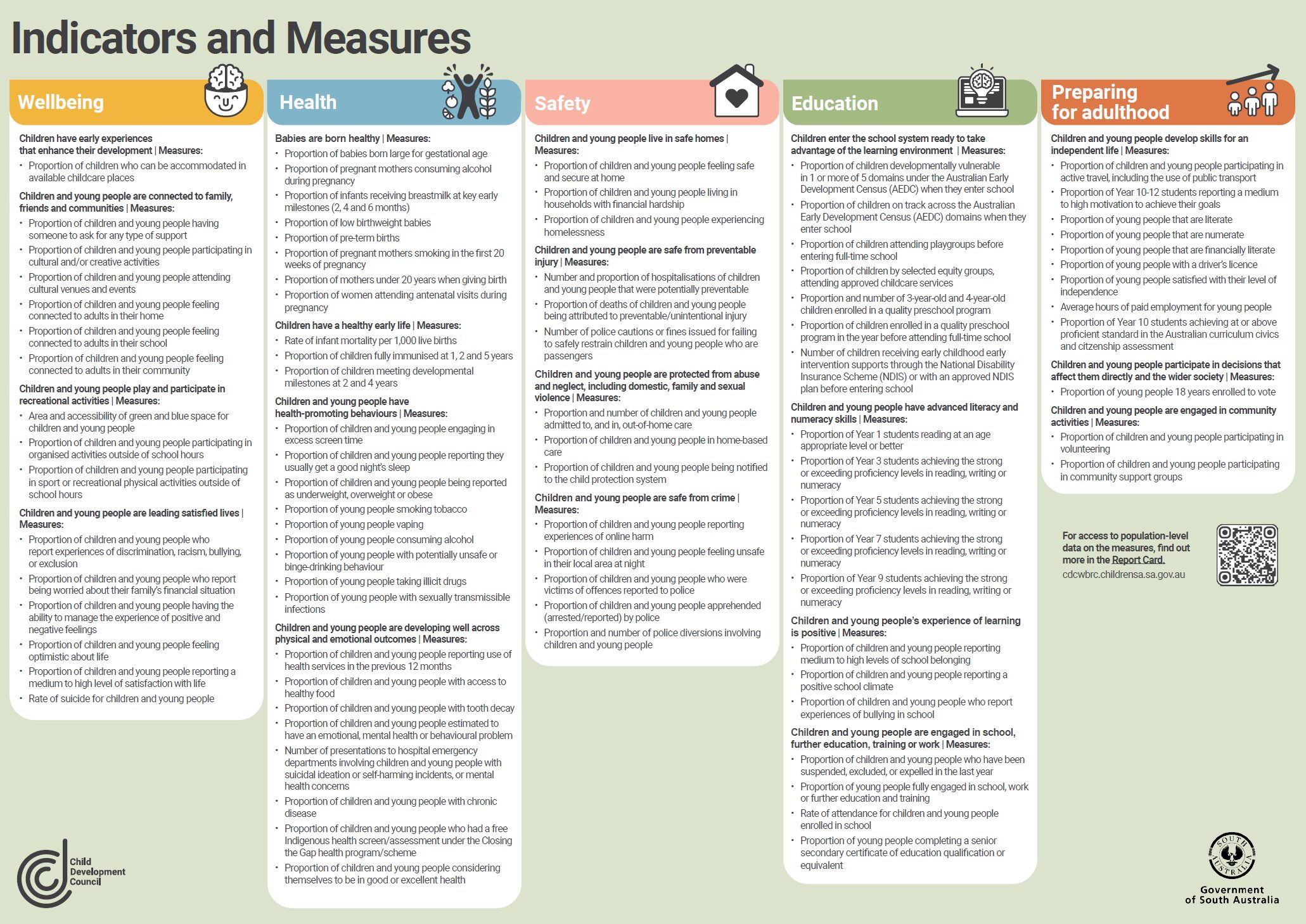
Technical information about the data is gradually being incorporated in the Report Card.
Aboriginal Data Sovereignty
Aboriginal Data Sovereignty ensures Aboriginal people’s right to control their own data and shapes strengths-based narratives that reflect their resilience, cultural diversity and self-determination. We recognise that this has not been fully realised in the current Report Card and must be addressed in the future.
When interpreting the data:
- The CDC analyses and seeks to publish that data in culturally safe and responsible ways to help improve outcomes for Aboriginal children and young people.
- The CDC’s Aboriginal Reference Group advises on the publication of data and information regarding Aboriginal children and young people.
- In support of the inalienable rights of Aboriginal peoples, the CDC aspires to current best practice for the collection, ownership, and application of data and information about Aboriginal peoples, their lifeways and territories.
- The CDC seeks to collaborate with Aboriginal peoples and organisations to identify enablers and barriers to improving Social and Emotional Wellbeing.
Acknowledgement
Aboriginal peoples have made and continue to make a unique and irreplaceable contribution to South Australia. The Child Development Council acknowledges and respects Aboriginal peoples of South Australia as the Traditional Owners and occupants of the lands and waters. We honour their rich cultural, spiritual and historical knowledge.